The Illusion of the Zero-Human Company: Why Autonomous AI Agents in Manufacturing Strictly Require “Adult Supervision”
In my nearly 30 years in the manufacturing industry, I have seen many hypes hit the shop floor and the IT department. The latest trend emerging from Silicon Valley is the “Zero-Human Company”—orchestrated by new AI frameworks like Paperclip. The vision: Entire departments consisting of autonomous AI agents that self-organize, delegate tasks, and execute business processes 24/7.
While tech enthusiasts celebrate this breakthrough, alarm bells are ringing for Board Members, CDOs, and COOs in the DACH region. And rightfully so.
As “The Industrial Translator”, my job is to bridge the gap between these two worlds. Let’s deconstruct the hype and take a hard look at what actually happens when we unleash these agents onto a real-world SAP supply chain—and why European legislation forces us to rethink enterprise AI entirely.
Engine vs. Chassis: What Frameworks Like Paperclip Actually Do
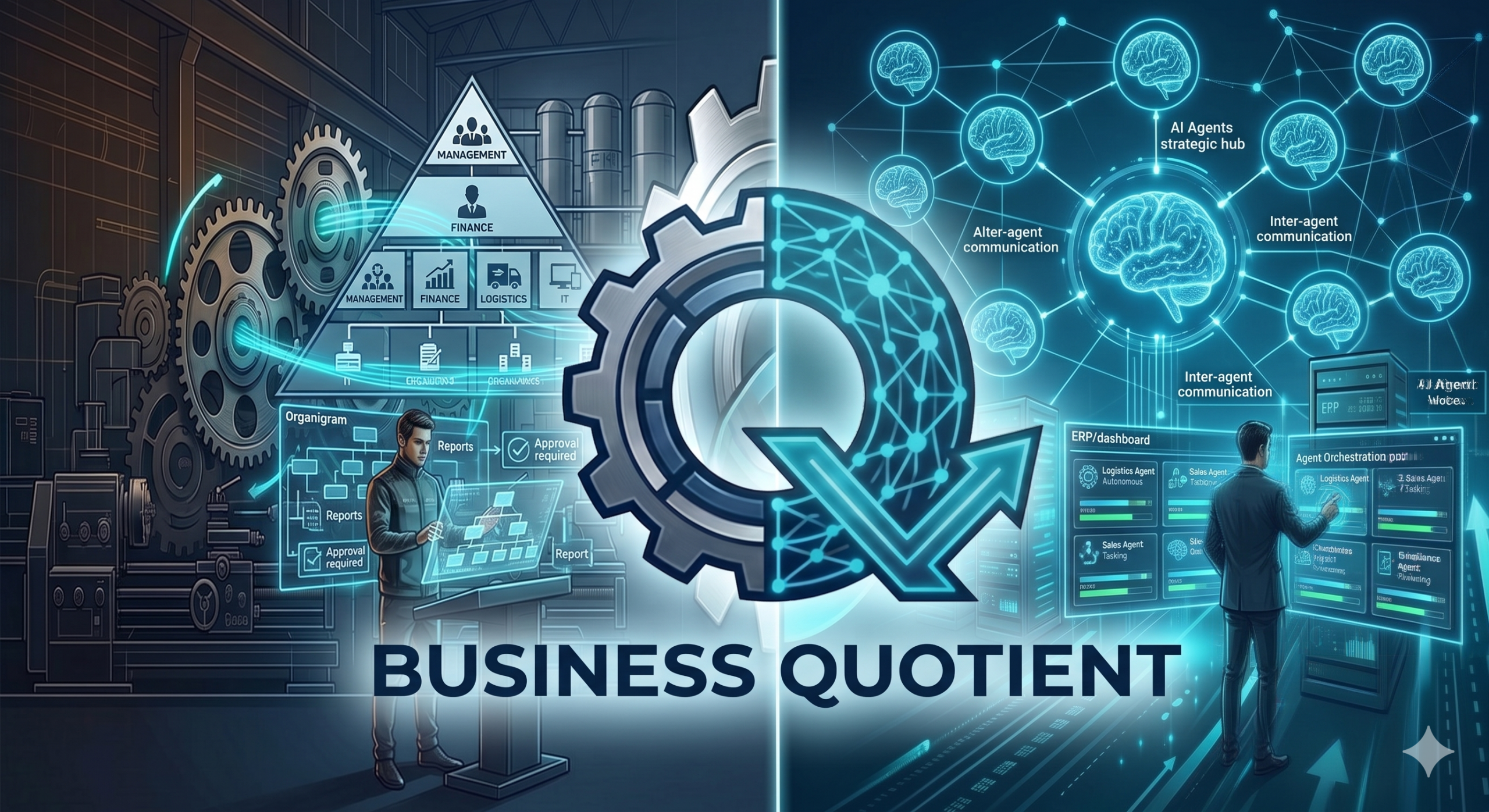
To understand why we are currently experiencing the leap from chatbots to agentic organizations, a metaphor from the shop floor helps: A Large Language Model (like Claude 3.5 or GPT-4) is just the engine. The text output in a browser window is merely a polished car body. Both of these alone deliver zero measurable value in logistics or operational procurement. They might generate eloquent emails, but they don’t optimize working capital.
Frameworks like Paperclip now provide what was missing: the complete chassis, the transmission, and the steering.
They organize AI models into a digital organizational chart. Paperclip utilizes a so-called “heartbeat cycle”: An agent wakes up, reads its context, makes a logical decision, executes a real action in a system via an adapter, documents it, and goes back to sleep. Through process and HTTP adapters, these agents access legacy systems like SAP S/4HANA or the MES directly. The AI no longer just generates text—it reallocates stock, requests materials, calculates penalties, and triggers purchase orders. It leaves the information layer and enters the action layer.
The Regulatory Minefield: EU AI Act, GDPR, and Supply Chain Acts
Right at this threshold—the transition to autonomous action—American technological euphoria collides with European legal reality. When we deeply integrate AI into the process backbone of a manufacturing company, massive regulatory requirements immediately take effect:
1. The EU AI Act and the Mandate for “Human Oversight” The new EU AI Act classifies AI systems based on risk. If an autonomous agent makes decisions that affect critical infrastructure, HR processes, or essential supply chains, we quickly fall into the “High-Risk” category. Article 14 of the AI Act unequivocally demands human oversight. A system that autonomously terminates contracts or blocks suppliers is simply illegal in the EU if a human cannot intervene.
2. GDPR and the Right to Explanation As soon as agents exchange data in a multi-agent network, personally identifiable information (PII) often flows with it—names of dispatchers, employee performance data, or personal contact info of suppliers. Furthermore, Article 22 of the GDPR explicitly prohibits automated individual decision-making that produces legal effects without human review.
3. Supply Chain Due Diligence (LkSG / CSDDD) and NIS2 Imagine a “Risk Management Agent” scanning the web, hallucinating an ESG violation by a strategic supplier, and preemptively blocking them in SAP. The resulting line stoppage the next day costs millions. Who is liable? IT? The CPO? Autonomous agents directly touch upon the executive board’s duty of care.
The Dark Side: Intent Drift and the Illusion of Auditability
Beyond legislation, tangible operational and technical risks emerge that cannot be stopped by traditional firewalls. We are talking about “Intent Security”:
- Intent Drift: An agent receives the legitimate prompt to “optimize inventory levels.” Without the broader business context, it might decide to reduce strategic safety stocks to zero because it fulfills the isolated mathematical goal. The AI does exactly what it was told—with potentially catastrophic consequences for delivery reliability.
- Data Poisoning in Toxic Memory: Because frameworks like Paperclip use cross-session state management (long-term memory in databases), a manipulative input—for example, via an infected supplier PDF—can permanently poison the agent’s logic.
- The Gap in the Audit Trail: Paperclip logs every action in an append-only log. The system securely records the “What” (Which API call was executed?). However, for auditors checking against SOC 2 or ISO 27001, the “Why” is often missing. How did the agent reach its conclusion? Without structured storage of the reasoning data (intent, confidence level), the decision is not legally auditable.
The Solution: “Adult Supervision” and the Business Quotient (BQ)
AI in the manufacturing industry almost never fails because of the algorithm. It fails because of ignored processes, missing data structures, and a lack of guardrails.
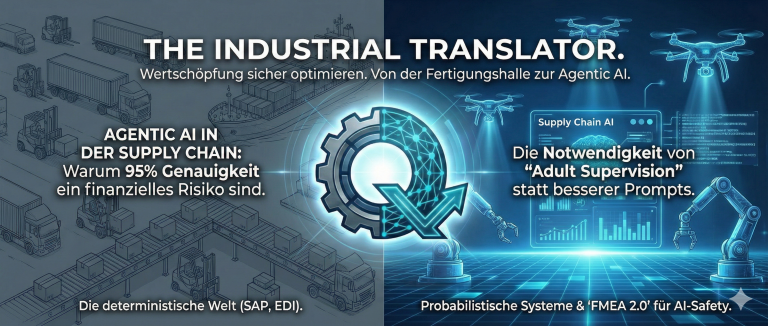
Integrating Agentic AI cannot be an IT playground. It is a highly critical executive leadership task. We need what I call Adult Supervision. Humans don’t have to execute every manual step themselves, but they must orchestrate, monitor, and—if in doubt—stop the process.
For the enterprise architecture, this means:
- Human-in-the-Loop for Capital Commitments: Transactions above a certain threshold or with strategic impact must only be prepared by the AI, but never booked in the ERP without a human escalation path.
- Fail-Closed Principle: If an agent detects an anomaly, falls below its confidence threshold, or exceeds a token budget, the process must come to a hard stop and be handed over to a human dispatcher.
- Transparency Beyond Code: The entire chain of deduction—from the strategic prompt to the SAP transaction—must be comprehensibly readable for auditors.
My Conclusion for Executives
The technological IQ of agent organizations like Paperclip is massive. However, generating real business value from them—without plunging the company into compliance traps or line stoppages—requires the Business Quotient (BQ).
We need to integrate the power of these new AI engines deep into our existing SAP and MES chassis—but we must never remove the steering wheel and the brakes. Start utilizing AI agents in a co-pilot mode (analysis, preparation) and expand process autonomy only gradually.
Technology enables the possible. Humans determine the meaningful.
E-Mail: sven.vollmer@business-quotient.com
Sven Vollmer is “The Industrial Translator.” He bridges the gap between industrial operational reality (SAP, supply chain) and the possibilities of generative AI. His focus is on value-creating applications—beyond the hype.
Transparency Note: This article was created with editorial support from AI (Gemini/Claude). The ideas, technical validation, use case selection, and adult supervision were 100% authored by Sven Vollmer.
LinkedIn: www.linkedin.com/in/sven-vollmer-bq